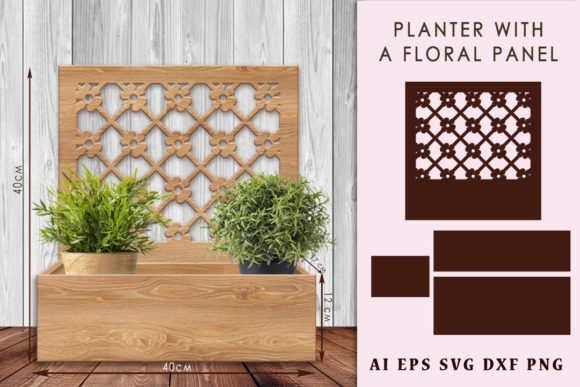
Planter with a Floral Panel: DIY Home De
The intersection of functional decor and creative craftsmanship often yields the most rewarding home improvement projects. For those looking to elevate their living spaces without incurring significant costs or hiring professionals, the Planter with a Floral Panel concept offers a compelling solution. This resource is not merely a set of instructions; it represents a comprehensive digital toolkit designed for individuals who wish to construct a decorative planter featuring an intricate floral motif. By combining structural design with aesthetic appeal, this project allows users to transform a simple balcony corner or indoor shelf into a personalized display area.
Understanding the Core Offering
At its heart, the Planter with a Floral Panel. DIY Home De is a collection of vector-based assets intended for fabrication. The product includes AI, EPS10, SVG, and PNG files, all provided on a transparent background at 300 dpi resolution. This level of technical specification is critical for anyone intending to cut these shapes from materials such as wood, acrylic, or heavy cardstock. The inclusion of multiple file formats ensures compatibility across various software ecosystems, from professional design suites like Adobe Illustrator to more accessible cutting machine software used by hobbyists.
The primary purpose of this kit is to facilitate the creation of a planter box that serves a dual function: holding plants while acting as a visual focal point. The "Floral Panel" aspect refers to the decorative elements that are cut out and assembled to form the sides or back of the planter. Unlike standard planters that rely on the shape of the container alone for interest, this design integrates patterns that allow light to filter through or create depth when viewed from different angles. The transparency of the background files means that designers can easily place these floral motifs onto any substrate color without worrying about white boxes surrounding the design.
Technical Specifications and Usability
The quality of the source files dictates the success of the final physical product. A 300 dpi resolution is particularly important for the raster images (PNG), ensuring that if printing is part of the workflow, the output remains crisp and free of pixelation. However, the vector formats (AI, EPS10, SVG) offer superior flexibility. These formats allow the user to scale the floral panel elements up or down without any loss of quality, making it possible to adapt the design for a small windowsill pot or a large floor-standing planter.
For the maker, the usability of these files hinges on the clarity of the cut lines. In vector graphics, clean paths are essential for machines like Cricut or Silhouette to execute precise cuts. If the lines are jagged or overlapping incorrectly, the resulting wooden or plastic pieces will not fit together seamlessly. The provision of EPS10 files suggests a high degree of compatibility with older and newer versions of industry-standard software, reducing the friction often associated with file conversion. This attention to detail indicates that the creator, Svetlana, understands the practical needs of the end-user who intends to build rather than just view the design.
Practical Application and Construction
Translating digital files into a physical object requires a specific approach. The process typically involves cutting out the individual elements—whether they are the frame of the planter or the decorative floral panels—and assembling them using glue or nails. This DIY nature appeals to a broad demographic, including entrepreneurs looking to create unique inventory for craft fairs and homeowners seeking a therapeutic weekend activity.
One of the standout features of this project is its versatility regarding planting. The design accommodates both natural and artificial flowers. When used with real plants, the planter may require a waterproof liner or a separate inner pot to protect the constructed material from moisture. Alternatively, the inclusion of a flower sponge mentioned in the original description suggests a method for supporting artificial arrangements, which eliminates maintenance concerns entirely. This duality makes the Planter with a Floral Panel suitable for low-maintenance environments or spaces where natural light is insufficient for live flora.
From a construction standpoint, the assembly process relies on the precision of the cut. If the user opts for wood, the thickness of the material must be considered during the design phase to ensure structural integrity. Thin plywood might warp under the weight of wet soil, whereas thicker MDF or solid wood provides stability but requires more robust fastening methods. The floral panels themselves serve a dual purpose: they add aesthetic value and can provide additional structural support if interlocked correctly. This integration of form and function is a hallmark of well-designed DIY resources.
Target Audience and Use Cases
This resource is particularly valuable for specific groups within the creative economy. Freelance graphic designers and illustrators often look for ways to monetize their skills beyond screen work. Owning or utilizing this kit allows them to produce tangible goods for sale, bridging the gap between digital art and physical merchandise. Similarly, small business owners in the home decor sector can use these designs to create custom orders for clients who desire unique, handcrafted items.
Beyond commercial applications, the kit is ideal for serious hobbyists and educators. Teachers can utilize the project to demonstrate concepts in geometry, spatial reasoning, and material science, guiding students through the entire lifecycle of a product from digital file to physical reality. Bloggers and content creators focused on home improvement or DIY crafts will find the high-resolution assets useful for creating tutorial content, providing their audience with clear visuals of the finished product.
Evaluating Long-Term Value and Limitations
When assessing the long-term value of the Planter with a Floral Panel. DIY Home De, one must consider the durability of the final product versus the cost of the initial investment. Since the files are digital, there is no degradation over time, and they can be reused indefinitely for multiple projects. This contrasts with purchasing a pre-made planter, which is a single-use purchase. The ability to print the files repeatedly allows for experimentation with different materials and finishes, adding to the overall utility of the purchase.
However, realistic expectations are necessary. The success of the project depends heavily on the user's access to appropriate tools. Without a cutting machine, laser cutter, or advanced manual cutting skills, achieving the precision required for a seamless assembly can be challenging. Furthermore, the design assumes a certain level of proficiency in handling adhesives and fasteners. For beginners, the learning curve might be steeper than anticipated, particularly if working with materials that require sanding or finishing before assembly.
Another consideration is the environmental context. While the digital aspect is eco-friendly in terms of waste reduction, the physical construction involves material usage. Users should consider sourcing sustainable woods or recycled plastics to align with the growing demand for environmentally conscious home decor. The planter's effectiveness also varies based on placement; in high-traffic areas, the delicate nature of cut-out panels might make them susceptible to accidental damage, necessitating protective coatings or varnishes.
Conclusion on Utility
The Planter with a Floral Panel. DIY Home De stands out as a versatile tool for those who value customization and craftsmanship. It successfully merges the convenience of digital downloads with the satisfaction of hands-on building. By offering a wide range of file formats and high-resolution assets, it caters to both professional makers and enthusiastic amateurs. While it requires a baseline of skill and equipment to execute properly, the potential for creating a unique, personalized interior accent is significant. Whether used to stock a boutique shop or to decorate a personal sanctuary, this resource provides a solid foundation for creative expression. For those willing to invest the time in cutting and assembly, the result is a functional piece of art that reflects individual style and ingenuity.