Two Level Roofs Chinese Building Pattern: A Comprehensive Guide for Designers
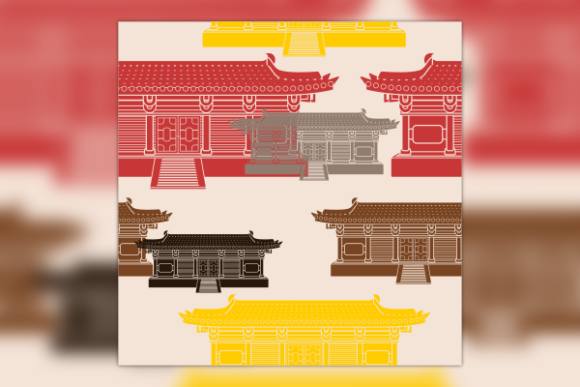
The Two Level Roofs Chinese Building Pattern represents a sophisticated intersection of historical architecture and modern vector design. At its core, this pattern features the iconic silhouette of traditional Chinese structures, specifically highlighting the distinctive double-eaved rooflines that have defined imperial and temple architecture for centuries. Unlike generic Asian motifs that often rely on stylized clouds or abstract dragons, this specific pattern offers a structural fidelity that appeals to designers seeking authenticity in their projects.
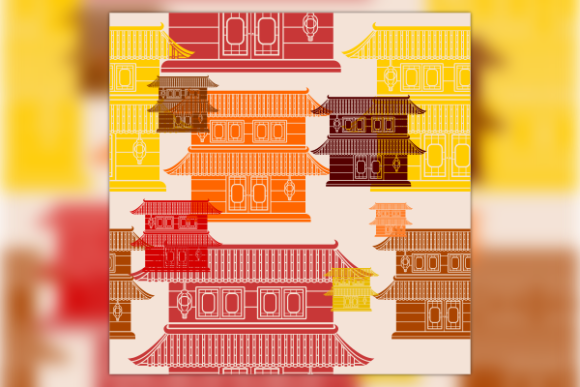
When evaluating this asset, it is crucial to understand that it is not merely an image but a versatile digital tool. The design typically presents a flat monochrome illustration of a building with two-tiered roofs, adorned with hanging lanterns. This visual language is rendered as a seamless pattern, meaning the elements repeat without visible breaks, creating a continuous texture. For professionals in the textile, stationery, and branding industries, this distinction between a static image and a functional pattern library is significant.
Distinctive Features of the Two-Tiered Silhouette
The defining characteristic of the Two Level Roofs Chinese Building Pattern lies in its geometric clarity. Traditional Chinese architecture is renowned for its sweeping curves and complex bracket systems (dougong), but in the context of a flat monochrome vector, these details are distilled into clean lines. The two-level roof structure creates a natural hierarchy within the composition, drawing the eye upward toward the eaves.
This architectural element serves as more than just decoration; it acts as a cultural signifier. In historical contexts, the number of roof levels often denoted status, with single-story structures common for residences and multi-tiered roofs reserved for palaces and temples. By incorporating this specific motif, designers can subtly convey themes of heritage, stability, and grandeur without needing explicit text.
The inclusion of hanging lanterns adds a layer of narrative depth. Lanterns in Chinese culture symbolize good fortune and joy. When integrated into a seamless loop, they create a rhythmic visual cadence that mimics the experience of walking through a historic courtyard at night. The contrast between the solid form of the building and the delicate suggestion of light from the lanterns provides a balanced aesthetic that works well in both dark and light colorways.
Comparison with Other Architectural Motifs
In the vast landscape of oriental design assets, the Two Level Roofs Chinese Building Pattern occupies a unique niche compared to floral patterns like cherry blossoms or symbolic icons like the yin-yang. While floral designs offer organic softness, the architectural pattern introduces structure and geometry. This makes it particularly suitable for backgrounds where legibility is required, such as text-heavy invitations or merchandise labels.
Furthermore, when compared to 3D renderings of Chinese buildings, the flat monochrome style of this vector offers superior scalability. A 3D model may look impressive at high resolution, but it often loses impact when reduced to small sizes, such as on a business card or a fabric swatch. The vector-based approach ensures that the crisp lines of the roof edges remain sharp regardless of the output size.
Another point of comparison is the seamless nature of the pattern versus isolated illustrations. Many stock assets provide a single building image that must be manually tiled by the user. The Two Level Roofs Chinese Building Pattern arrives pre-configured as a seamless tile. This saves considerable time in the workflow, allowing the designer to apply the texture instantly to large surfaces without worrying about alignment errors or visible seams.
Technical Advantages of Vector-Based Architecture
For the professional designer, the format of the asset is as important as the visual content. The availability of the pattern in editable SVG format, alongside EPS and PDF, places it firmly in the category of high-utility resources. The primary advantage here is the ability to manipulate individual elements within Inkscape or Adobe Illustrator. Unlike raster images (like JPEGs) which become pixelated when enlarged, vector graphics are mathematically defined, allowing for infinite scaling.
This editability opens up a wide range of creative possibilities. A designer might start with the default black and white monochrome version but decide to recolor the lanterns to match a brand's palette. They could adjust the spacing of the tiles to create a denser or more open background. Perhaps the most powerful feature is the ability to isolate the roof structure to use as a standalone icon, separate from the lanterns or the repeating pattern.
The instruction to use Inkscape software highlights the accessibility of this resource. Inkscape is a robust, open-source vector editor that handles SVG files natively. This means users do not necessarily need expensive proprietary software to utilize the full potential of the pattern. The workflow involves opening the file, unlocking layers, and applying fills or strokes to the paths representing the roofs and lanterns. This flexibility is essential for customizing the design for specific project requirements.
File Format Versatility
- SVG: Ideal for web design, responsive interfaces, and further editing in vector software. It maintains the smallest file size while preserving quality.
- EPS: The industry standard for print production, ensuring compatibility with professional printing presses and layout software like InDesign.
- PDF: Useful for sharing proofs or for direct printing workflows that support vector data.
- PNG: High-resolution raster versions provided for immediate use in applications that do not support vector editing, such as certain photo editors or presentation slides.
The inclusion of a ZIP archive containing all these formats ensures that the asset is future-proof. Whether the final output is a massive billboard or a tiny mobile app icon, the source files guarantee that the Two Level Roofs Chinese Building Pattern will retain its integrity.
Practical Applications and Use Cases
The versatility of this pattern extends across multiple industries. In the realm of textiles, the seamless nature of the design makes it perfect for fabric printing. Imagine a silk scarf featuring a repeating pattern of these roofs in gold thread against a navy background, or a cotton tablecloth with a subtle, low-contrast version for a modern home decor line. The flat style ensures that the pattern does not overwhelm the fabric's texture.
Stationery and invitations represent another strong fit. Weddings, corporate events, or cultural festivals often require a touch of elegance and tradition. The Two Level Roofs Chinese Building Pattern can serve as a watermark, a border, or a full-page background. Its structured layout allows text to sit comfortably on top without being lost in the imagery, a common issue with busy photographic backgrounds.
Mercandises such as tote bags, mugs, and packaging also benefit from this asset. The monochrome base allows for easy color customization to align with product branding. For example, a tea company might use the pattern to package premium green tea, evoking the feeling of a serene garden pavilion. The hanging lanterns add a festive element that resonates well with holiday-themed products.
Limitations and Considerations
While the Two Level Roofs Chinese Building Pattern is highly effective, it is important to acknowledge its limitations. The flat monochrome style, while elegant, lacks the atmospheric depth of photorealistic imagery. If a project requires a sense of realism, weathering, or specific lighting conditions, this vector pattern may feel too graphic or illustrative. It is best suited for designs that embrace a modern, stylized aesthetic rather than a hyper-realistic one.
Additionally, the cultural specificity of the design means it is not a universal solution. Using this pattern in a context unrelated to East Asian culture, history, or aesthetics might result in a confusing message. It carries a strong thematic weight, so designers should ensure their overall concept supports this cultural reference. For instance, using it on a generic tech product without any contextual link to heritage might seem out of place.
Another consideration is the complexity of the file itself. While the visual style is simple, the underlying vector paths can sometimes be intricate, especially if the original artist included fine details in the roof brackets. Opening very complex SVG files in older software versions might occasionally cause performance issues, though this is rare with modern hardware.
Decision Factors for Choosing This Asset
When deciding whether to incorporate the Two Level Roofs Chinese Building Pattern into a project, several factors should guide the choice. First, consider the desired tone. If the goal is to evoke tradition, structure, and cultural pride, this pattern is an excellent candidate. If the project aims for a chaotic, energetic, or purely abstract vibe, other options might be more appropriate.
Second, evaluate the technical requirements. Does the project demand scalability? Will the design be printed on various materials ranging from paper to vinyl? If yes, the vector format of this pattern is a decisive advantage over raster alternatives. The ability to edit colors and shapes in Inkscape also adds value if the client requests changes late in the process.
Finally, assess the competitive landscape. In markets saturated with generic "Asian" tropes, a design based on accurate architectural forms stands out. It demonstrates a level of research and respect for the subject matter that clients and audiences appreciate. However, if the budget is extremely tight and only a quick, low-resolution image is needed, a free, lower-quality raster clip art might suffice, though it would lack the professional polish of this vector set.
In conclusion, the Two Level Roofs Chinese Building Pattern offers a blend of aesthetic appeal and functional utility. It bridges the gap between historical appreciation and contemporary design needs. By providing editable, scalable, and culturally rich elements, it empowers designers to create meaningful work that honors the legacy of Chinese architecture while meeting the demands of modern commerce. Whether for fabrics, invitations, or digital backgrounds, it remains a robust choice for those looking to integrate authentic oriental elements into their portfolio.